


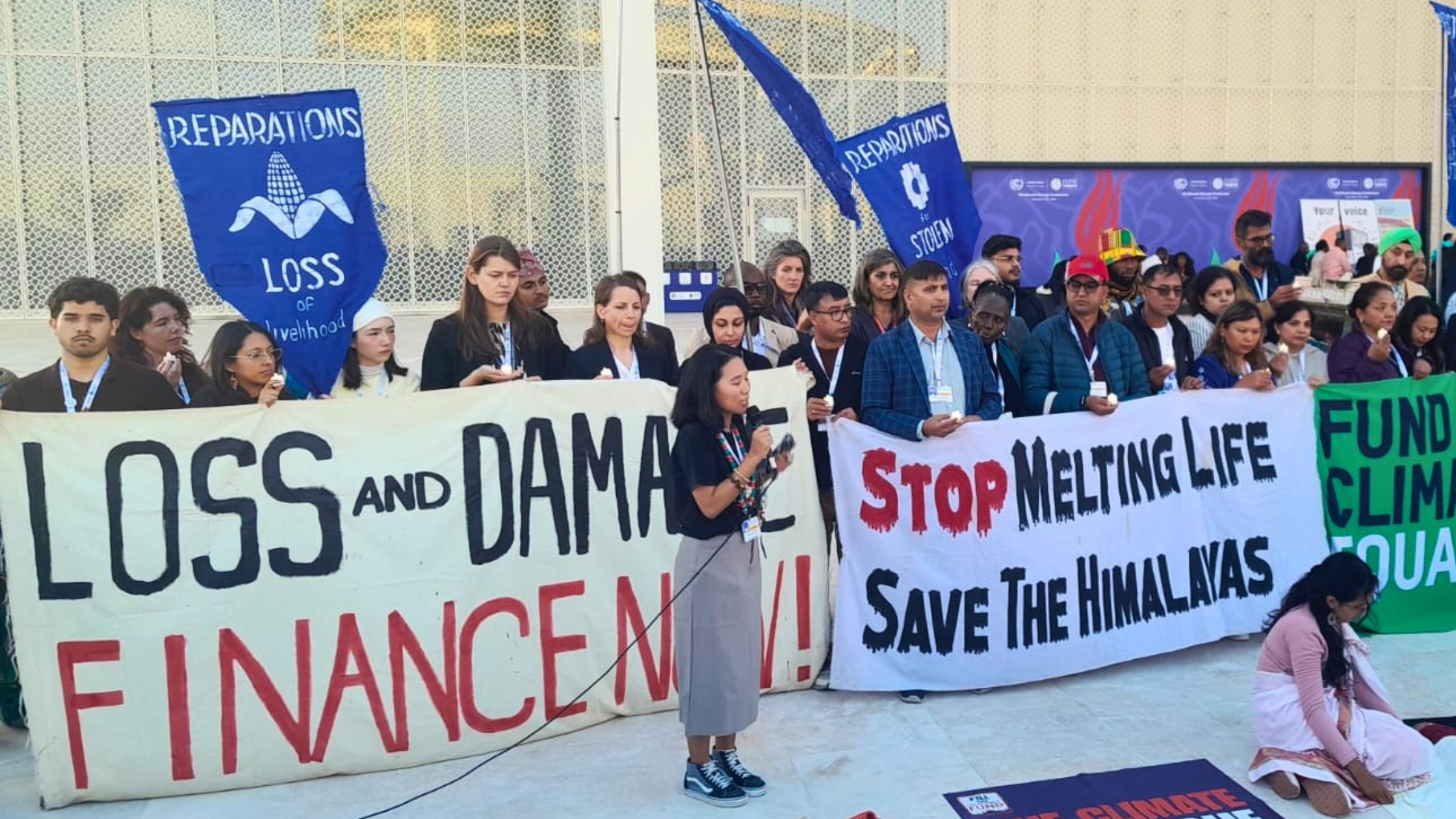
LOSS AND DAMAGE FUND: REQUESTS EXCEED AVAILABLE RESOURCES BY EIGHT TIMES
As of 31 July 2026, donor countries had disbursed only $485.8 million out of the $822.7 million pledged, while the Fund allocated $342 million for its first operational phase. Its inaugural international call for proposals drew responses from 119 countries requesting roughly $2.8 billion—more than eight times the available budget. Beyond funding shortages, technical capacity remains a major hurdle: many vulnerable nations still lack systems to quantify losses and damages, particularly non-economic ones. Negotiations continue amid disagreements over several paragraphs.
The Fund for Responding to Loss and Damage (FRLD), established at COP27 in 2022 and operationalised at COP28, has recently moved into its project financing phase. However, a vast gap has emerged between the resources pledged by donor countries, those actually paid into the Fund, and—above all—the requests submitted by developing nations.
According to the Fund’s official report to COP31, as of 31 July 2026, $822.71 million had been pledged, yet only $485.77 million had actually been disbursed—equivalent to 59% of commitments. The Fund’s Board allocated $342 million to this initial funding phase.
A Single Call and Nearly Three Billion in Requests
To date, the Fund has launched one inaugural international call for proposals, announced at COP30 in Belém in November 2025, with a submission window running from 15 December 2025 to 15 June 2026. The call allowed eligible countries to apply for grants between $5 million and $20 million for country-owned and country-driven interventions.
Demand far outstripped available resources: 198 funding requests were submitted—176 of which were deemed eligible for assessment—from 119 countries, totalling approximately $2.8 billion. Demand therefore exceeds the $342 million available for this first phase by more than eightfold.
The first funding decisions are expected at the Board’s meeting in December 2026. The Fund also plans to launch its first replenishment cycle in 2027, and many observers at COP31 were hoping to see concrete pledges in that direction.
What Is the True Cost of Climate Loss and Damage?
The applications submitted to the Fund do not represent a comprehensive estimate of the losses and damages suffered by developing countries, but merely the value of projects put forward for financing. According to analysis by the Stockholm Environment Institute (SEI), the financial needs of low-income countries to address climate loss and damage could reach $400–$1,600 billion per year by 2030. This is orders of magnitude—hundreds of times—greater than the Fund’s current resources, although estimates carry uncertainty and do not necessarily correspond to the Fund’s future financing requirements.
At the national level, studies and methodologies already exist, yet there is no standardised assessment framework used across all countries eligible for the Fund. The core challenge is therefore not solely a shortage of money. Many nations still lack established domestic systems to identify, monitor, and quantify climate-induced losses and damages—particularly non-economic losses and those linked to slow-onset events. Strengthening assessment capacities, building national inventories, and developing shared methodologies could become a vital component of future funding. The Fund’s report also outlines a dedicated support facility with an annual allocation of $7.5 million—capped at $250,000 per country—intended for institutional support and application preparation.
Negotiations on the Text
Meanwhile, negotiations on the agenda item covering guidance to the Fund have entered a new chapter. Delegations remain divided on several key points, even though the draft discussed in the latest session was viewed as a step forward by much of the room. The sharpest divisions centre on contributions, which currently stand at $486 million against $823 million pledged. Specifically, developing countries are demanding that existing commitments be honoured and calling on developed nations to assume greater financial responsibility. Parties are also split over issues such as the representativeness of statistics from the first round of funding applications, the level of granularity required in the text, and the inclusion of Indigenous Peoples in decision-making processes.
Article by Giacomo Cozzolino and Marco Colpo, Italian Climate Network delegates at COP31 in Antalya.
Cover image: photo by Giacomo Cozzolino